
Performance Marketing vs. Brand Marketing: Striking the Right Balance in 2025
Performance Marketing vs. Brand Marketing: Striking the Right Balance in 2025
Introduction
Marketing today is a high-stakes game of agility, data, and emotional connection. The beating heart of every successful campaign is two heavyweight strategies: Performance Marketing and Brand Marketing. One is fueled by data and immediate rewards, the other is long-term and emotional, fueled by trust and loyalty.
Marketers will often bicker over who should get a bigger slice of the budget, but the real power lies in knowing how to strike both. In this blog, we lay out both methods, the advantages and disadvantages, and how to use them to achieve maximum business impact.
1. What is Performance Marketing?
Performance marketing is fact-based marketing for quantifiable results like clicks, leads, sales, and return on ad spend (ROAS). Only specific actions are paid for, which makes it ideal for achieving real-time objectives.
Key Channels:
- Pay-per-click (PPC) advertising
- Social media advertising (Facebook, Instagram, TikTok)
- Affiliate marketing
- Influencer campaigns with performance KPI
- Email retargeting
- Native and programmatic ads
- Metrics Tracked:
- Click-through rate (CTR)
- Cost-per-click (CPC)
- Conversion rate (CVR)
- Customer acquisition cost (CAC)
- Return on ad spend (ROAS)
Advantages:
- High measurability
- Fast feedback and optimization
- Budget control
- Scalable campaigns
- Disadvantages:
- Isn’t long-term emotional bonding
- Performance suffers without strong brand equity
- Can perpetuate short-termism
2. What is Brand Marketing?
High-definition marketing to shape public opinion, win trust, and create emotional relationships with audiences. Its goal isn’t direct conversions but long-term loyalty and recall.
Primary Channels: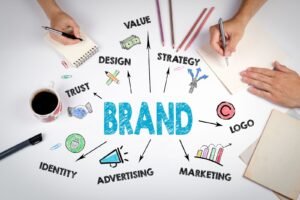
- TV and radio ads
- Sponsorships and live events
- Public relations and earned media
- Influencer marketing (awareness-driven)
- Content marketing (blog posts, podcasts, video)
- Organic social media
- Objectives:
- Brand recall and awareness
- Emotional engagement
- Trust and credibility
- Market differentiation
- Benefits:
- Builds long-term customer loyalty
- Supports premium pricing
- Improves performance campaigns
- Compels organic and referral traffic
- Limitations:
- More challenging to measure directly
- Slower ROI realization
- Requires higher initial investment
3. Performance Marketing vs. Brand Marketing: What’s Different Criteria
- Performance Marketing
- Brand Marketing
- Objective
- Conversions right away
- Long-term loyalty
- Measurement
- Readily measurable (CPC, ROAS)
- Indirect measurements (awareness, sentiment)
- Budget Flexibility
- Scalable and adaptable
- Typically fixed and long-term
- Emotional Impact
- Low
- High
- ROI Timeline
- Short-term
- Long-term
- Tools Used
- Google Ads, Meta Ads, SEO tools
- PR, TV, Influencer outreach, branded content
4. Why the Debate Exists
- The performance vs. brand marketing debate is fueled by objective and mindset differences:
- Startups and D2C companies will focus on performance to drive quick growth and sales.
- Legacy brands may focus more on decades’ worth of brand equity built.
- CMOs and CFOs may battle each other: one wants brand consistency, the other wants measurable returns.
- In actuality, though, both strategies are complementary and dependent on each other.
5. Why You Need Both in 2025
- In today’s omnichannel, digital-first world, a single strategy is risky. Here’s why both matter:
- Performance Needs Brand:
- Strong brand creates ad engagement and trust.
- Better brand name recall means reduced CAC in the long term.
- Brand Needs Performance:
- The most powerful brand message won’t succeed if no one hears it.
- Performance marketing multiplies the reach of branding initiatives.
- Example:
- Nike runs successful brand campaigns (“Just Do It”) that build emotional connection. But it also invests in digital performance campaigns for launches and conversions.
6. When to Invest in Performance Marketing
- Product or service launch and need instant traction
- Constrained marketing budget with an urgency for instant ROI
- Testing new market or messaging
- High-competition verticals with competitive bidding
- End-of-quarter targets to meet revenue targets
- Tools to Use:
- Google Search Ads for high intent consumers
- Facebook or LinkedIn retargeting campaigns
- Conversion landing pages
- Influencer coupon or affiliate offers
7. When to Prioritize Brand Marketing
- Building a new brand identity or rebranding
- Entering a very competitive market where differentiation is needed
- Luxury or premium items that need emotional storytelling
- Preparing for long-term growth and retention
- Tactics to Use:
- Brand storytelling videos on Instagram or YouTube
- Thought leader and influencer collaboration
- Podcast sponsorships
- Purpose-driven campaigns (social, environmental, cultural issues)
8. Measuring Brand Marketing in 2025
Traditional brand advertising used to be hard to measure, but 2025 flipped the script. Here’s why:
Tools and Metrics:
- Brand lift studies (Meta, YouTube)
- Share of voice (SOV) by social listening
- Sentiment analysis tools like Brandwatch or Sprinklr
- Branded search volume trends
- Direct and organic traffic growth
- Net Promoter Score (NPS)
9. Budget Allocation Strategy: A Hybrid Model
- The 60/40 Rule (by Binet & Field):
- 60% of budget to brand marketing
- 40% to performance marketing
- Why it works
- Fosters long-term growth while fueling short-term sales
- Facilitates steady funnel nurturing
- Budget Planning Recommendations:
- Invest brand budget in storytelling and visibility
- Use performance budget for strategic retargeting and conversion
- Constantly optimize by ROI and brand health
10. Integrated Marketing Examples
- Apple
- Big brand campaigns on social and TV
- Product pre-order targeted advertisements
- Airbnb
- Emotional brand videos
- Destination-based paid search bookings
- DTC Brands (e.g., Warby Parker)
- Instagram influencer branding
- Facebook retargeting for abandoned carts
11. The Role of AI in Both Balancing
- AI helps with:
- Attribution modeling (seeing what drove the sale)
- Predictive analytics (forecasting future behavior)
- Dynamic creative optimization (ad content optimization in real-time)
- Personalized brand messaging at scale
- Meta, Google, and HubSpot leverage AI to suggest when to spend budget on brand or performance based on seasonal trends and behavior shifts.
12. Common Mistakes to Avoid
- One-sided reliance: Forgetting brand will hurt loyalty. Forgetting performance will miss conversions.
- Short-term thinking: Excessive focus on ROAS can lead to creativ fatigue and higher CAC.
- Inconsistent messaging: Performance campaigns should sound true to your brand voice.
- Lack of cross-team alignment: Brand and performance teams must collaborate and not compete against one another.
Conclusion:
- Bridging the Gap for Sustainable Growth. Performance marketing and brand marketing are not competitors; they are adjuncts to your growth strategy. By 2025, the secret to success is having a connected customer journey where acquisition is fueled by performance and retention is fueled by branding. Brands that blend both methods will not only achieve their KPIs but also develop enduring value, awareness, and credibility. Whether your brand is a startup ready for explosive growth or an enterprise aiming for market supremacy, balance is the solution.
Related links :
The Creator Economy & Personal Branding: Thriving in the Digital Age
Cookieless Tracking & Data Privacy: Navigating the Future of Digital Marketing in 2025
Unleashing the Future: Top AI-Powered Marketing Tools & Automation Strategies for 2025
Products:
 |
 |
 |
 |
Leave a Reply