
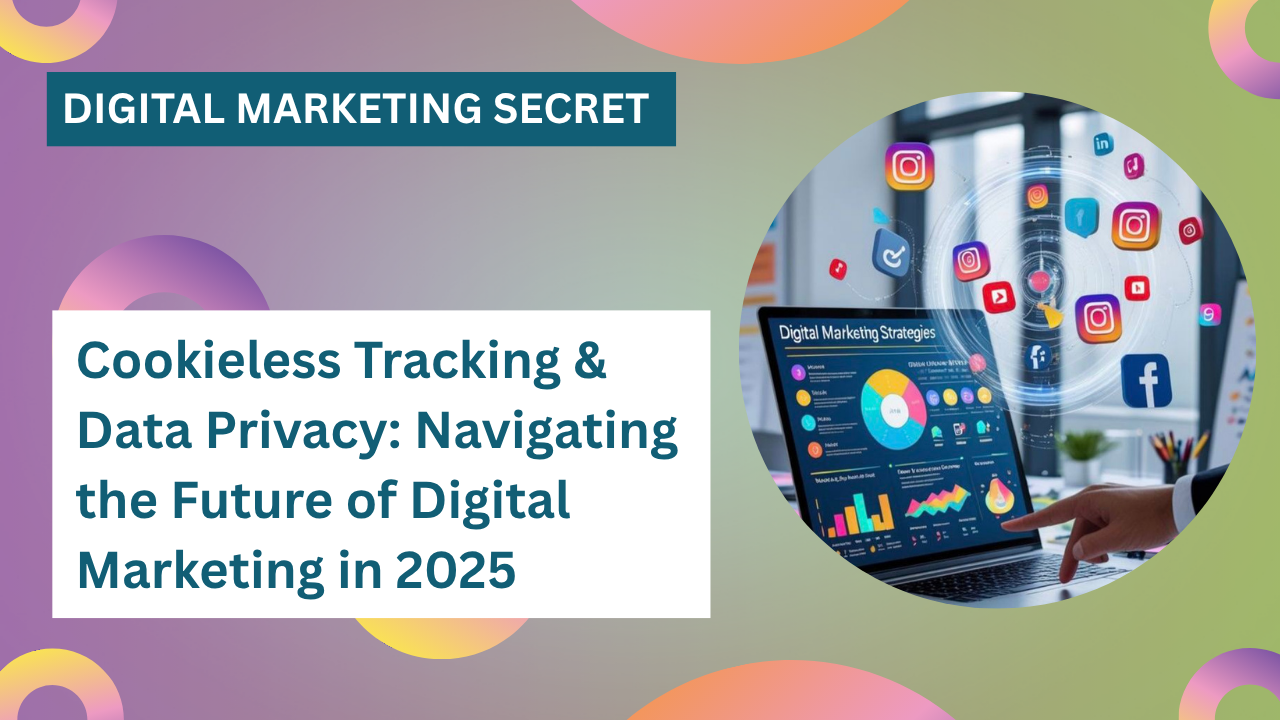
Cookieless Tracking & Data Privacy: Navigating the Future of Digital Marketing in 2025
Cookieless Tracking & Data Privacy: Navigating the Future of Digital Marketing in 2025
Introduction
The world of digital advertising is on the cusp of a seismic change. With increasingly privacy-related issues and regulation raining down on them, marketers have to reinvent themselves in a third-party cookie-less environment. No easy remap, this is a total transformation of how brands are going to gather information, target customers, and track performance. This is the future of measurement and a greater data privacy in a cookieless world.
In this comprehensive blog post, we will be explaining why third-party cookies are disappearing, which new technologies are replacing them, what marketers must do to adjust, and how it will affect privacy-focused consumers in 2025.
1. What Are Cookies and Why Are They Disappearing?
Cookies are small amounts of information stored in a browser that recall activity across different websites. They drive everything from ads to behaviorals, retargeting, and cross-site tracking.
Types of Cookies:
- First-party cookies: On the website a user currently visits. Stored to keep usernames, etc.
- Third-party cookies: On third-party websites (like ad networks) to track users from site to site.
- Why Third-Party Cookies Are Nearing Obsolescence
- Browser updates: Apple Safari and Mozilla Firefox already block third-party cookies by default. Google Chrome, the most popular browser, is also joining in with their phase-out later in 2024.
- Privacy legislation: Legislation like GDPR, CCPA, and India’s Digital Personal Data Protection Act require consent to track.
- User behavior: People want control of data usage.
2. How the Cookieless Era Impacts Digital Marketing
- Ad Targeting
- Cross-site behavior is less evident without cookies, and hence audience segment and target less precisely.
- Attribution and Measurement
- Attribution of conversions to certain touchpoints becomes challenging, distorting ROAS measurements.
- Retargeting
- Dynamic retargeting is more challenging without cookie tracking, weakening the effectiveness of display advertisement.
- Customer Journey Mapping
- The entire funnel tracking becomes challenging without individual tracking.
3. Cookieless Tracking Alternatives: What Marketers Are Doing in 2025
- First-Party Data
- Collected directly from customers on your site, apps, or CRM.
- Examples:

- Email addresses
- Purchase history
- In-site behavior
- Benefits:
- More accurate and compliant
- Enhances customer trust
- Contextual Advertising
- Displays ads by page content rather than user behavior.
- Example:
- Showing sports equipment advertisements on a sports blog
- Server-Side Tracking
- Gets rid of the browser-based tracking and puts it on the server side, giving more control of the data and less ad blockers interference.
- Universal IDs
- Utilizes anonymized, hashed first-party data-based identifiers to identify people across devices.
- Examples:
- Unified ID 2.0
- LiveRamp ID ne. Google Privacy Sandbox
- Collection of APIs (e.g., Topics API and Attribution Reporting) designed to keep users private as well as facilitate ad targeting and measurement.
- Consent Management Platforms (CMPs)
- Platforms enabling user consent to tracking and placing brands into harmony.
4. Data Privacy in 2025: The Global Landscape
- GDPR (Europe)
- Requires consent before collection of personal data
- Ensures data minimization and transparency
- CCPA/CPRA (California)
- Provides users with opt-out right against sale of data
- Respects transparent disclosures and access rights to data
- India’s Digital Personal Data Protection Act (DPDP)
- Enacted in 2023
- Values purpose limitation and consent
- Global Trends
- More governments enact privacy legislations
- Companies need to meet the highest level of standards (“privacy by default”)
5. Establishing a Privacy-First Marketing Strategy
- Collect First-Party Data Actively
- Use newsletters, quizzes, loyalty programs, and gated content
- Make Transparency and Consent Priorities
- Use transparent cookie banners
- Make opt-in/opt-out easy
- Make CRM and Customer Data Platforms (CDPs) Priorities
- Merge touchpoint data
- Make personalized marketing without third-party data possible
- Invest in Clean Rooms
- Privacy-safe spaces where brands and publishers can match data without having raw personal data shared
- Regular Quality Content and Community Building
- Gain data and loyalty through value
- Build direct interaction
6. Measuring impact in a Cookieless World
- Leverage Modeled Data
- Support AI-driven forecasts with modeled data and aggregation
- Leverage Probabilistic Attribution
- Instead of deterministic tracking, use algorithms to deduce likely conversion sequences
- Cross Multiple Data Sources
- Combine CRM data, on-site activity, and survey research
- Leverage Google’s Enhanced Conversions and Meta’s Conversions API
- Attribution accuracy capabilities become stronger with hashed data
- Track Brand Metrics
- Measure brand awareness, engagement, and loyalty over time
7. Benefits of Cookieless Tracking for Consumers and Brands
- For Consumers:
- More data control
- Less intrusive advertising
- More transparency and trust
- For Brands:
- Improved customer relationships
- Improved data quality
- Less reliance on third-party platforms
8. Real-World Examples of Cookieless Innovation
- The New York Times
- Reduced reliance on third-party data
- Built proprietary first-party audience segments in-house
- Procter & Gamble (P&G)
- Switched to contextual ads and direct consumer engagement
- Airbnb
- Eliminated performance marketing dependency
- Invested in brand storytelling and direct traffic
9. Top Tools for a Cookieless World
- Google Consent Mode
- Meta Conversions API
- Segment (Customer Data Platform)
- OneTrust or Cookiebot (CMPs)
- HubSpot and Salesforce (CRM-first marketing)
- Permutive and LiveRamp (First-party data activators)
10. The Road Ahead: What to Expect After 2025
- Emergence of Zero-Party Data: Users give data willingly (preferences, interests, feedback)
- AI and Machine Learning Models: Personalization off of behavior, not identity
- Biometric and IoT Data: New horizons for personalization, new horizons for threats to privacy
- Web3 and Decentralized Identity: Users are data wallet owners
- Stricter Controls: Privacy legislation will be more international and strict
Conclusion
- The death of third-party cookies is not the end of online advertising. It’s merely the beginning of a brighter, more sustainable, and more transparent way to connect with consumers. Successful brands in 2025 will be those that transform, prioritize user trust, and establish marketing behaviors on a data privacy-first foundation.As the regulations are evolving, so will we. A mission to responsible data capture, advertising in the environment they should be in, and good content will enable marketing to thrive in the cookieless landscape and maintain the users’ privacy in hand.
Related links:
Local SEO & Google Maps Optimization: The 2025 Playbook for Local Business Growth
The Rise of Voice Search & Conversational SEO: How to Optimize for 2025 and Beyond
Social Commerce & Shoppable Content: The Future of Online Shopping in 2025
Products:
 |
 |
 |
 |
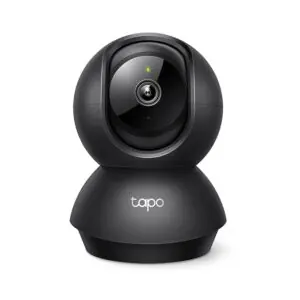
| Tapo C201 360° 2MP 1080p Full HD Pan/Tilt Home Security Wi-Fi Smart Camera| Alexa Enabled| 2-Way Audio| Night Vision| Motion Detection| Sound and Light Alarm| Indoor CCTV Black |
Leave a Reply